
Round Rock ADU Builders: ADU Rock Excavation in Williamson County: Caliche
Round Rock ADU Builders presents this guide on adu rock excavation in williamson county: caliche for property owners in Round Rock and Williamson County, Texas.
Building an ADU on Rock: What Excavation Actually Costs West of the Escarpment
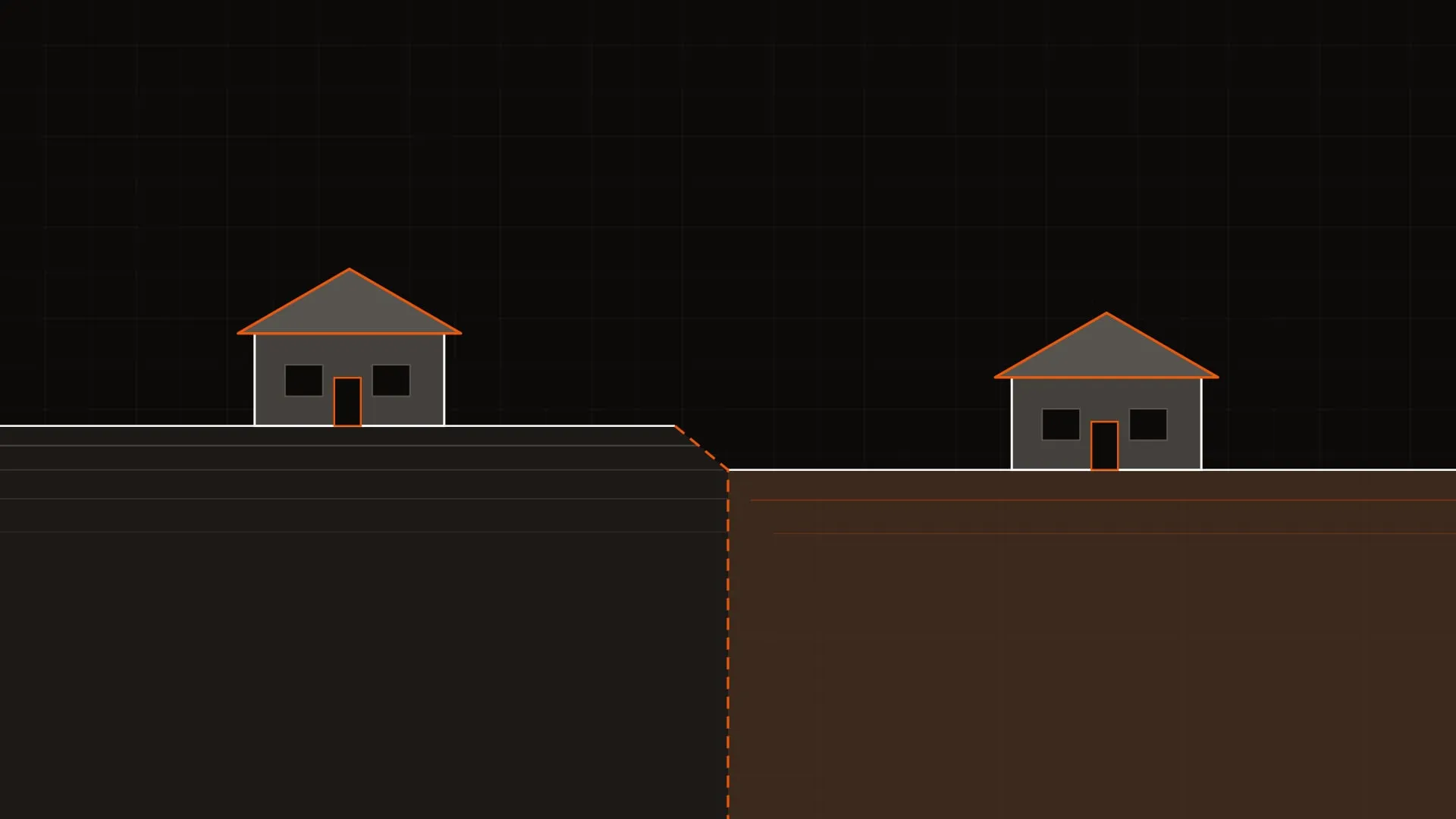
The Balcones Escarpment runs north to south through Williamson County, and it splits ADU construction into two different problems. East of it, the challenge is clay that moves with the seasons. West of it, the challenge is rock that does not move at all but has to be removed before anything can be built.
Homeowners in Brushy Creek, western Round Rock, and the Cedar Park corridor routinely get quotes that seem high compared to what a neighbor a few miles east paid for a similar unit. The difference is usually not the builder. It is the geology.
Where the Rock Starts
Direct answer: West of the escarpment, Edwards limestone and caliche frequently sit within one to four feet of the surface. A standard excavator bucket that would trench a clay lot in an afternoon will not cut it. The work needs a hydraulic rock hammer or rock saw, both of which carry a much higher hourly cost.
Depth to rock is not uniform even within a single lot. It is common to find three feet of soil at one corner of a proposed foundation and eight inches at another. That variation is exactly why a site assessment matters more here than anywhere else in Central Texas.
The Three Places Rock Drives Cost
Foundation excavation. A slab needs a level, properly prepared bearing surface. Where rock sits high, material has to be removed to reach design elevation.
Utility trenching. This is the item that surprises people most often. Water, sewer, and electrical service have to run from the primary residence to the new unit, and sewer in particular must maintain a consistent fall to drain properly. A sewer line cannot simply be routed around a rock shelf the way an electrical conduit sometimes can. It has to go where gravity requires, and if that means cutting fifty feet of trench through limestone, that is what the line costs.
Landscape restoration. Rock excavation produces spoil that has to go somewhere, and it disturbs more surface area than trenching soft ground. Restoring the yard afterward is a real line item.
How to Keep It From Becoming a Change Order
The failure pattern is predictable. A homeowner gets a per-square-foot quote based on the building alone, site work is estimated loosely or excluded, excavation begins, rock appears, and the project absorbs a change order that nobody planned for.
The fix is to establish depth to rock along both the foundation footprint and the utility route before a price is issued. A handful of test holes costs very little. It converts the largest unknown in a west-county ADU budget into a known quantity.
Design Choices That Reduce Rock Exposure
Once depth to rock is known, several decisions can meaningfully reduce excavation:
Move the unit closer to the house. Every foot of shortened utility run is a foot of trench that does not need cutting. On a rocky lot this tradeoff is worth taking seriously even at some cost to privacy.
Follow the existing service corridor. If the primary residence already has utilities entering from a particular direction, routing the ADU connection along the same path often finds ground that has already been disturbed and is easier to work.
Consider a garage conversion or attached suite. Both use an existing foundation and existing service connections. On a lot where rock makes a detached unit expensive, converting existing structure can deliver the same usable space for considerably less.
Work with the grade rather than against it. On sloped western lots, a design that steps with the natural contour requires less cut than one that demands a single flat pad.
The Upside Nobody Mentions
Rock is expensive to remove and excellent to build on. A foundation bearing on competent limestone is not subject to the seasonal shrink and swell cycle that drives foundation performance problems across the eastern half of the county. The engineering required is often simpler, and the long-term stability is genuinely better.
The cost is front-loaded into site work. What you buy with it is a foundation that is unlikely to give you trouble.
Ready to Plan Your Round Rock ADU Project?
Schedule a free property feasibility assessment with our local engineering team or explore our custom building services.
We pull your parcel's limits first.
Everything below is the general case. The zoning district, the setbacks and the soil under one address are what actually set the budget.
Call (512) 690-0340Mon - Sat: 7:00 AM - 7:00 PM